
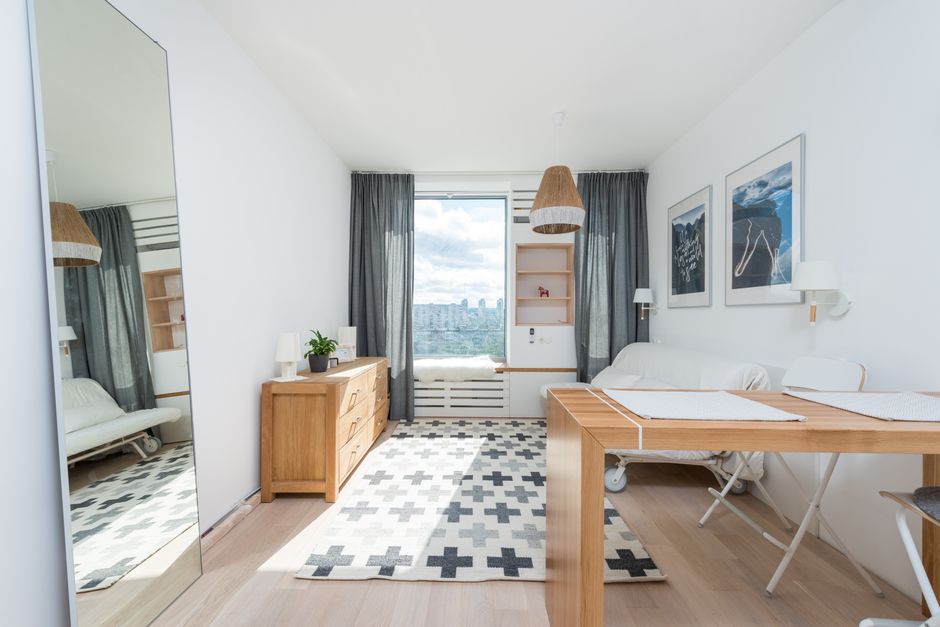
If you live in an older Rochester home, a cozy Buffalo bungalow, or a smaller ranch-style house anywhere in Western New York, you probably have at least one room that feels a little cramped. Maybe it's a narrow hallway bathroom, a compact bedroom, or a galley kitchen that could use some breathing room. The good news is that the right paint color can make a surprisingly big difference in how spacious a room feels, even without knocking down a single wall.
We paint rooms of every shape and size across the WNY area, and we've seen firsthand how a smart color choice can open up a space. This guide will walk you through the best colors, finishes, and painting strategies to help your small rooms feel larger, brighter, and more comfortable.
Why Paint Color Affects How Big a Room Feels
Before we get into specific colors, it helps to understand why paint matters so much in small spaces. It comes down to how our eyes perceive light and depth.
Light colors reflect more natural and artificial light, which makes walls appear to recede. Dark colors absorb light, which can make walls feel like they're closing in. That doesn't mean you can never use dark colors in a small room (we'll talk about that later), but it does explain why lighter shades are the go-to recommendation for making spaces feel open.
There's also the concept of visual continuity. When you use the same or similar colors on walls, trim, and ceilings, your eye moves smoothly around the room without "stopping" at contrasting boundaries. This creates the illusion of more space because the brain isn't mentally breaking the room into smaller visual sections.
Not all light colors work equally well. Here are the categories that consistently deliver results in compact spaces.
Warm Whites and Off-Whites
Pure white can sometimes feel sterile, especially in rooms with limited natural light (which is common during our long WNY winters). Warm whites with a hint of cream, yellow, or pink undertone tend to feel inviting without darkening the room. Some excellent options include:
- Benjamin Moore White Dove (OC-17): A soft, warm white that works in almost any room. It's one of the most popular choices for a reason.
- Sherwin-Williams Alabaster (SW 7008): A creamy white that feels clean without being cold.
- Benjamin Moore Simply White (OC-117): Slightly brighter and crisper than White Dove, great for rooms that get decent natural light.
Warm whites are particularly effective in small bedrooms and living rooms. If you're considering a full refresh for your home's interior, our interior painting services in Lima and surrounding communities can help you find the perfect shade for every room.
Soft Grays
Gray has been a dominant trend for years, and it holds up well in small spaces as long as you choose the right tone. Stick with light, warm grays rather than dark or cool grays, which can make a room feel dim and cave-like.
- Benjamin Moore Classic Gray (OC-23): Barely there, almost a tinted white. Works beautifully in tight hallways and small bathrooms.
- Sherwin-Williams Repose Gray (SW 7015): A true greige (gray-beige blend) that keeps rooms feeling warm and spacious.
- Benjamin Moore Pale Oak (OC-20): Technically a greige, this color shifts between warm gray and soft beige depending on the light, which keeps the room feeling dynamic and open.
Pale Blues and Greens
Cool colors naturally recede to the eye, meaning they make walls look farther away. Pale blue and soft green shades take advantage of this optical effect while adding a touch of personality that plain white can't match.
- Benjamin Moore Palladian Blue (HC-144): A light blue-green that makes bathrooms and bedrooms feel airy and calm.
- Sherwin-Williams Sea Salt (SW 6204): A subtle green-gray that changes beautifully with the light throughout the day.
- Benjamin Moore Quiet Moments (1563): A soothing blue-gray that works well in rooms with limited natural light.
These shades are especially popular for small bathrooms and guest bedrooms across the Rochester area. If you're planning a painting project in the eastern suburbs, we offer interior painting in Penfield and nearby towns.
Soft, Warm Neutrals
If white and gray feel too plain, warm neutrals like soft tans, light taupes, and warm beiges can add depth to a small room without making it feel smaller. The trick is to stay in the lighter end of the spectrum.
- Benjamin Moore Edgecomb Gray (HC-173): Despite the name, it reads as a warm, sandy neutral. Extremely versatile.
- Sherwin-Williams Accessible Beige (SW 7036): One of the most popular warm neutrals. It keeps rooms grounded without feeling heavy.
- Benjamin Moore Revere Pewter (HC-172): A warm gray-beige that pairs well with almost any trim color.
What About Dark Colors in Small Rooms?
Here's where things get interesting. The conventional advice says "always go light in a small room," but that's not the whole story. In some cases, a rich, dark color can actually make a small room feel more intentional and even more expansive.
The key is to go all in. When you paint the walls, trim, ceiling, and even built-ins the same deep color, you erase the visual boundaries of the room. Your eye can't easily tell where one surface ends and another begins, which creates a cocooning effect that can feel surprisingly spacious.
This approach works best in rooms where you're not trying to make the space feel big so much as make it feel special. Think of a small powder room, a reading nook, or a home office. Deep navy, charcoal, dark green, and moody blue-grays can all work beautifully.
A few things to keep in mind if you go dark:
- Use a satin or eggshell finish to reflect some light back into the room.
- Make sure your lighting is good. A dark room with poor lighting will just feel dark.
- Commit to the look. A dark wall with bright white trim in a tiny room can actually emphasize how small it is.
How Paint Finish Affects the Feel of a Room
Color gets most of the attention, but the sheen of your paint matters too, especially in small spaces.
Flat and Matte Finishes
Flat paint absorbs light rather than reflecting it. While it's great for hiding imperfections on walls and ceilings, it doesn't do small rooms any favors when it comes to making them feel open. Use flat finishes on ceilings and in larger rooms where you don't need the space to feel bigger.
Eggshell and Satin Finishes
These are the sweet spot for small rooms. Eggshell and satin finishes reflect a soft amount of light, which brightens the room without creating harsh glare. Eggshell is our most common recommendation for living rooms and bedrooms, while satin works great in kitchens, bathrooms, and high-traffic areas because it's easier to clean.
Semi-Gloss and Gloss Finishes
Higher-gloss finishes reflect the most light, which can help brighten a small space. However, they also highlight every imperfection in your walls. Semi-gloss is a solid choice for trim, doors, and cabinets. Speaking of cabinets, if you have a small kitchen, freshly painted cabinets in a lighter color can make a huge difference in how open the space feels.
Painting Techniques That Make Rooms Look Bigger
Beyond just choosing the right color, there are several painting strategies that can amplify the effect.
Paint the Ceiling a Lighter Shade
If your walls are any color other than white, paint the ceiling a shade or two lighter. This draws the eye upward and makes the ceiling appear higher. A bright white ceiling against soft gray walls, for example, creates the illusion of more vertical space.
Use the Same Color Throughout Connected Spaces
In smaller homes, using one consistent color in hallways, living areas, and bedrooms creates visual flow that makes the entire home feel larger. You don't need to paint every room the same shade, but sticking within the same color family helps. This is especially effective in many of the charming but compact homes throughout Western New York. Our residential painting work in Buffalo often involves creating this kind of cohesive color scheme across multiple rooms.
Match Your Trim to Your Walls
In a small room, contrasting trim color (like dark walls with bright white trim) creates visual "borders" that break up the walls and make the room feel boxed in. Painting the trim the same color as the walls, or just a shade lighter, removes those borders and lets the room feel more open.
Use Vertical Stripes Strategically
This one takes some skill, but painting subtle vertical stripes (using two sheens of the same color, for example) can make a room feel taller. It's not a common request, but it's a technique worth considering for a small dining room or entryway.
Don't Forget Accent Walls
An accent wall can actually work in a small room if you do it right. Paint the wall opposite the entry door a slightly deeper shade, and keep the other three walls light. This creates a sense of depth that draws the eye forward, making the room feel longer.
Room-by-Room Recommendations
Every room has its own lighting conditions, function, and feel. Here are some targeted recommendations for the rooms that tend to feel the smallest.
Small Bathrooms
Light blue-grays and pale greens work wonderfully in small bathrooms. They complement white fixtures and tile while keeping the room feeling fresh. Use a satin finish for moisture resistance. If your bathroom cabinets are dark or dated, consider having them professionally painted in a lighter color to open up the space even more.
Compact Bedrooms
Warm whites and soft neutrals are ideal for small bedrooms. They create a restful atmosphere and pair well with any bedding or decor. If the room gets minimal natural light, lean toward colors with warm undertones to prevent the space from feeling cold, which is especially important during Rochester's gray winter months.
Narrow Hallways
Hallways benefit most from the lightest colors you can find. A warm white or barely-there gray reflects light from adjacent rooms and makes the hallway feel like a natural extension of the living space rather than a cramped passageway. Homeowners in the Henrietta area and across Monroe County often ask us about hallway solutions, and color selection is always our first recommendation.
Small Kitchens
White and off-white remain the most effective choices for small kitchens. They reflect the light from windows and under-cabinet fixtures, making countertops and prep areas feel more open. Pairing light wall colors with freshly painted white or light gray cabinets can completely change how a small kitchen feels.
Home Offices and Dens
Small home offices are one place where the "go dark" strategy can really shine. A deep blue or green creates a focused, cozy atmosphere without feeling claustrophobic, especially when combined with good task lighting and a glossier finish on the trim.
Common Mistakes to Avoid
Even with the right color in mind, a few missteps can undermine your results:
- Not testing the color first. Paint looks different on a swatch, on a screen, and on your wall. Always paint a large sample (at least 2 feet by 2 feet) and view it at different times of day before committing.
- Ignoring undertones. A gray that looks perfectly neutral on the chip might read as purple or green on your wall, depending on your lighting. This is especially tricky in rooms with limited natural light.
- Using too many colors in a small home. If every room is a different bold color, the home can feel choppy and each room will feel smaller as a result.
- Skipping proper prep work. The best color in the world won't look right if the walls aren't properly patched, primed, and prepped. This is one of the biggest differences between a DIY job and a professional one.
- Forgetting about the ceiling. A yellowed or dingy ceiling will drag down even the brightest wall color. Fresh ceiling paint is often the single most impactful thing you can do in a small room.
Let MLZ Painting Help You Choose the Right Color
Picking the right paint color for a small room involves more than just grabbing something light off the shelf. Lighting conditions, existing fixtures, flooring, and the purpose of the room all play a role. It helps to work with someone who has painted hundreds of rooms across the area and can guide you toward the colors and finishes that will work best in your specific space.
At MLZ Painting, we work with homeowners throughout Rochester, Buffalo, and the surrounding WNY communities. Whether you need help with a single bathroom or want to repaint your entire home with a cohesive color scheme, we're happy to talk through your options and provide a free estimate. Our residential painting services cover everything from color consultation to flawless application.
Give us a call at (585) 362-2190 to get started. We'd love to help you make the most of every room in your home, no matter the size.

Contact Us
Ready to Transform Your Space? Get a Free Estimate Today
Thinking about a new color? Planning a full repaint? We'd love to discuss your project and provide a free, no-obligation estimate.